BMO CENTRE EXPANSION Engineering prowess supports architectural grandeur
By Ben Bayat
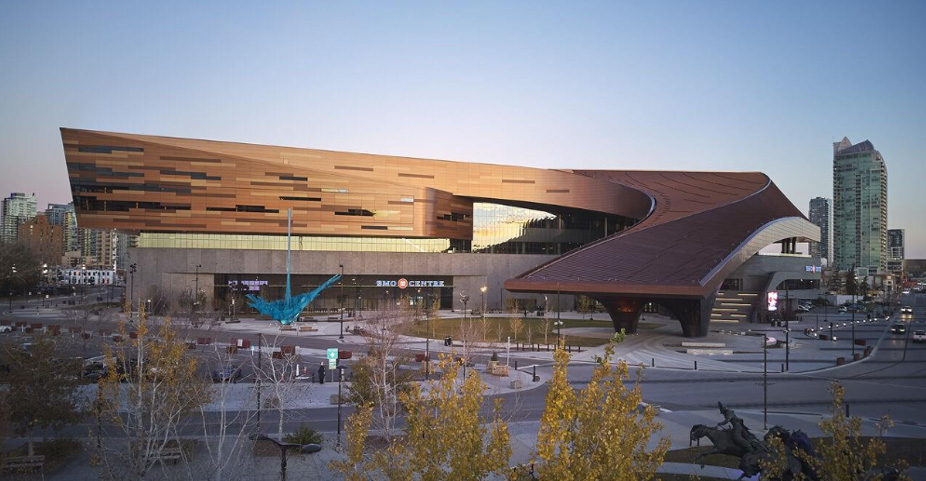
As the largest convention centre in Western Canada, the BMO Centre in Calgary offers over 1 million sq. ft. of space which includes 500,000 sq. ft. of rentable event space. Its recent expansion stands as a hallmark of modern civic infrastructure, seamlessly merging architectural ambition with engineering finesse with over half billion-dollar investment.
The expansion brings new exhibit halls to the main floor, meeting rooms to the second, and a new third floor featuring Canada’s second largest ballroom. The facility is designed entirely around the user experience and includes an exterior public plaza, adjacent to retail space, as a place to enjoy food and outdoor concerts. Extending over the plaza, a sculpted roof draws visitors up a grand outdoor staircase to the second-floor internal hub.
This transformative project redefines Calgary’s cultural and event landscape, while also setting a new standard for integrated design and construction excellence in Canada. At the heart of this successful expansion is the collaboration of dozens of companies over a span of four years.
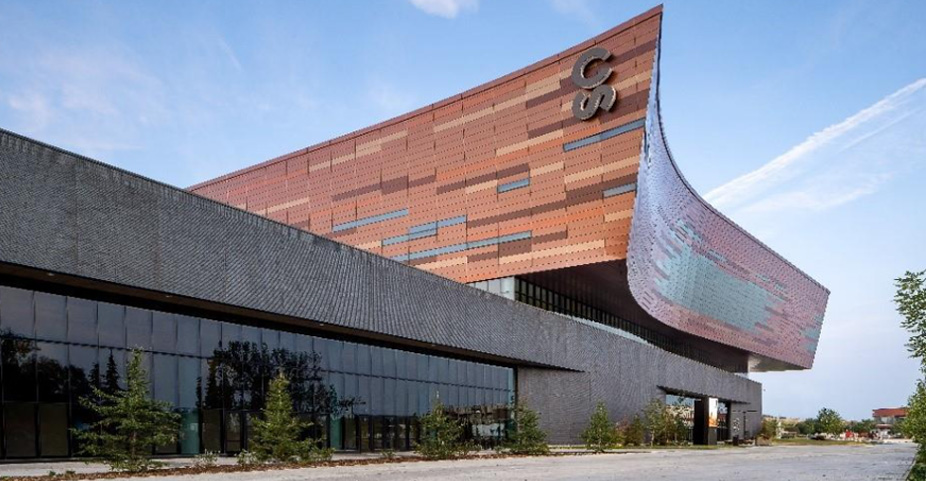
The façade design is defined by over 150 unique doublewythe insulated precast concrete panels with thin-brick finish, some weighing more than 11,340 kilograms (25,000 pounds). The panels were custom-designed to meet complex structural, thermal, and aesthetic requirements.
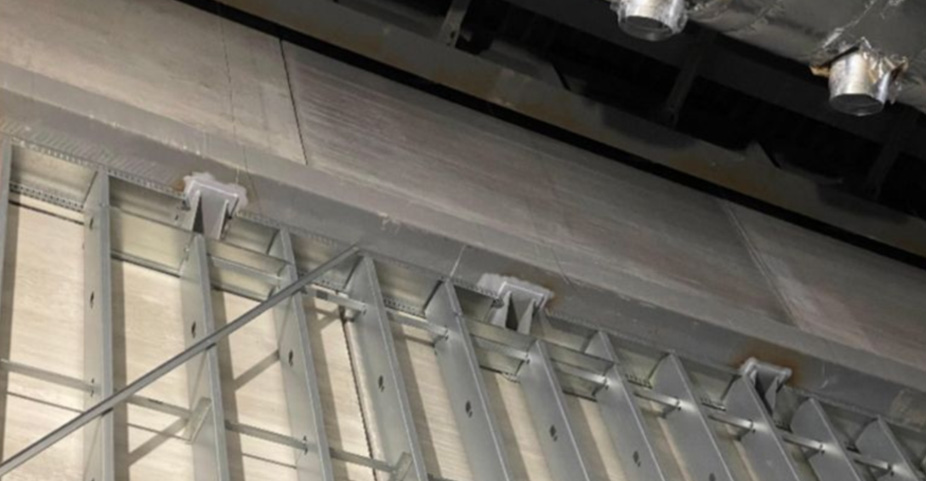
Each panel features 150 mm (6 inches) of Kingspan Kooltherm insulation which provides high thermal resistance while minimizing thermal bridging. The resulting envelope is airtight, energy-efficient, and durable—meeting stringent NBCC and CSA standards for thermal and structural performance.
Visually, the building achieves an elegant and cohesive look, thanks to a façade that cleverly merges masonry brick walls with precast panels. The use of custom thin-brick cladding in a Norman one-third running bond pattern, including carefully aligned soldier courses, corner quirks, and soffit returns, allowed for an authentic masonry appearance. In some areas, different thicknesses of thin brick were strategically employed to meet architectural intent, further enhancing the building’s aesthetic complexity.
Structural Solutions
What set this project apart was not just its size or aesthetics, but the technical challenges that had to be overcome.
Due to the building’s unique geometry and exposure conditions, the panels had to be engineered to resist site-specific wind loads determined by wind tunnel testing conducted by a specialized consultant. The variability and intensity of these pressures demanded tailored structural responses which precast engineer and modeller Building Theory met by designing each panel to accommodate unique loading scenarios.
Adding to the complexity, most of the supporting steel members were not aligned in the same plane, and many were located above the height of the precast panels, making conventional tieback connections unfeasible. To resolve this, custom steel brackets were designed using Finite Element Method (FEM) analysis, allowing tie-ins without altering the structural steel—a critical decision that preserved the construction schedule and avoided costly rework.
The vertical precast panels are supported on cast-inplace foundations, with approximately two-thirds of each panel cantilevered beyond the base. A specially engineered base connection was developed to resist the resulting eccentric loads and rotational forces. Additionally, some panels were suspended from steel beams located up to 0.5 metres (20 in.) away. These hung panels required robust connection designs to handle the significant eccentric loading.
The building’s grand entrance stair features precast coping elements or caps that twist and slope in three dimensions along a curved profile. Each panel was meticulously modelled in a 3D environment to incorporate dual-directional slopes. Invisible connections were integrated within the joints to create a seamless appearance while also enhancing the durability and longevity of the precast components.
Technology-Driven Precision
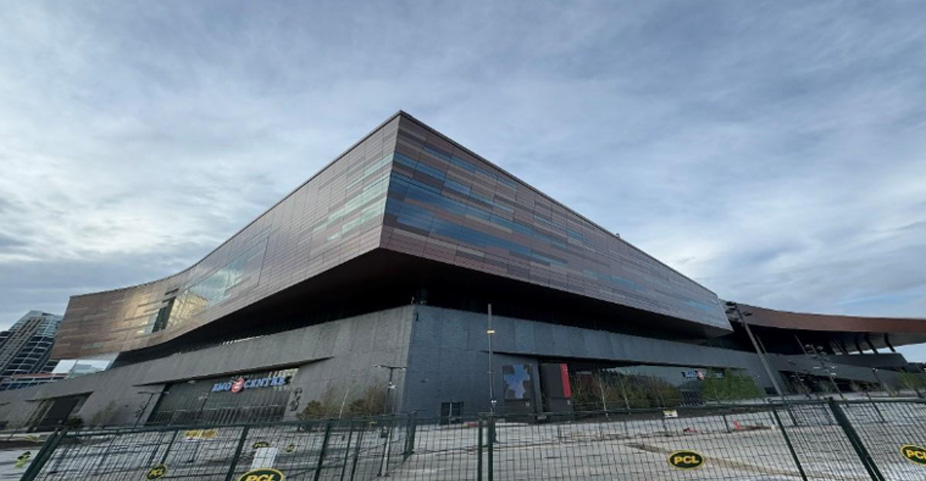
Behind this technical achievement was a cutting-edge digital workflow. The entire precast system was modelled in Tekla Structures, supported by in-house engineering tools developed by Building Theory. These tools allowed the team to run simulations, test connection scenarios, and validate designs against complex load paths and tolerances.
All coordination occurred within a fully integrated BIM environment, using Autodesk BIM 360 to manage collaboration among teams in real time. This process ensured millimetre-level accuracy between precast embeds, steel structure, and tie in details—streamlining both fabrication and field installation.
Calgary-based Knelsen (Precast Division) ensured that each complex panel was cast, transported, and installed to exacting standards. Working in close collaboration with Building Theory and Con-Steel, the erection team maintained precise tolerances and ensured every piece fit perfectly in place—despite the geometrical and logistical challenges posed by the site.
The BMO Centre expansion has garnered multiple national and international awards, underscoring its innovation and design excellence. Notable recognitions include the:
- ENR Cultural Project Award of Merit
- CISC Ontario Region Award of Excellence in Steel Construction
- CEA Award of Excellence, among others
These accolades reflect not only the architectural beauty of the project but also the technical mastery behind it. From custom wind load design to complex connections and envelope detailing, the BMO Centre expansion showcases what’s possible when engineering innovation meets architectural ambition.
BEN BAYAT, PHD, P. ENG IS CEO AT BUILDING THEORY
Photos courtesy of Building Theory
- ArchitectStantec, Populous, and S2 Architecture
- Precast SupplierBuilding Theory by Knelsen (Precast Division)
- EngineerBuilding Theory
- General ContractorPCL Construction
- Structural EngineerRJC Engineers

Imagineering Magazine
View our latest issue of the popular Imagineering Magazine.
